7 Steps of Basic Life Support in Emergency
Updated on 11 December, 2025
Updated on 11 December, 2025
The primary goal of Basic Life Support (BLS) is simple: to keep oxygen and blood flowing to the brain and vital
organs until advanced medical care becomes available. BLS provides the foundation of emergency care and can make the
difference between life and death in critical situations.
Recognized worldwide, these techniques are not reserved only for healthcare professionals; they are designed so that
anyone can apply them with confidence. The 7 steps of basic life support are straightforward, effective, and
represent one of the most universally accepted lifesaving skills.
Basic Life Support refers to a structured process of emergency care that prioritizes maintaining circulation and
breathing in a patient who has suffered cardiac arrest, respiratory failure, or other critical emergencies. At its
core, BLS ensures that vital organs remain oxygenated until professional medical support arrives.
The importance of basic life support becomes clear when considering how sudden emergencies unfold. A cardiac arrest
can cause irreversible brain damage within just four to six minutes if circulation is not restored. Likewise,
choking, drowning, or severe trauma can deprive a person of oxygen in moments. This is why knowing what is basic
life support and applying it promptly is crucial.
BLS is applicable in numerous situations:
Timely intervention dramatically increases survival rates. BLS is more than a medical protocol; it is an essential
human response that empowers individuals to act with confidence and clarity when seconds matter. Learning how to be ready for medical emergencies through BLS training equips
ordinary people to save extraordinary numbers of lives.
Following the basic life support steps in sequence ensures a structured, effective response. Each stage serves a
specific purpose, building upon the last to maximize the patient’s chances of survival. Let’s explore the BLS
step-by-step process in detail.
The very first responsibility in any emergency is to ensure the environment is safe. Before rushing to the victim,
pause and take a quick look around. Are there hazards like oncoming traffic, electrical wires, fire, or falling
debris? Your safety is critical—becoming another casualty helps no one.
Checking for safety also means positioning yourself where you can assist effectively without exposing yourself or
others to new risks. Only after confirming the scene is secure should you proceed to help the patient.
Once safety is established, approach the person calmly and check if they are responsive. This can be done by gently
tapping their shoulders and asking loudly, “Are you okay?” Sometimes, a strong verbal prompt or a light shake can
elicit a response.
If the individual reacts with movement, speech, or even eye contact, it indicates some level of consciousness.
However, if there is no reaction, immediate action is required. This assessment distinguishes between someone who
merely fainted and someone experiencing cardiac arrest or respiratory failure.
This step also raises the distinction of BLS vs CPR.
While BLS encompasses the full process of assessing, calling for help, providing chest compressions, and rescue
breathing, CPR is one part of that process, focused specifically on chest compressions and rescue breaths.
The next step is to activate emergency medical services (EMS) without delay. In most countries, this means dialing
the national emergency number, such as 108, or you can also call Red Health on this number – 9114911911. If others
are nearby, instruct someone specifically: “You, call EMS”, so there is no confusion. If you are alone, call for
help immediately before starting further interventions.
This step ensures that professional medical responders are on their way, bringing advanced life support capabilities
and transport to a hospital. Even if you are performing BLS perfectly, long-term survival depends on transitioning
the patient to professional care.
Once help is on the way, quickly evaluate the patient’s breathing and pulse. Tilt the head back slightly, open the
airway, and look, listen, and feel for signs of breathing. Observe the chest for rise and fall, listen for breath
sounds, and feel for air movement.
Simultaneously, check the carotid pulse on the neck. This should not take more than 10 seconds. If there is no
breathing or pulse, it’s time to act immediately.
At this stage, understanding the basic life support
steps is critical. Accurate assessment prevents wasting valuable time and ensures that CPR is initiated
promptly when required.
Chest compressions are the cornerstone of the basic life support process. They mimic the pumping action of the
heart, maintaining blood flow to the brain and organs.
Here’s how to deliver effective compressions:
The rhythm can be remembered using the beat of songs with a similar tempo. The key is to maintain steady,
uninterrupted compressions, allowing full chest recoil after each push. High-quality compressions greatly influence
survival rates.
After every 30 compressions, open the airway using the head tilt-chin lift technique and provide 2 rescue breaths.
Pinch the nose closed, seal your mouth over the victim’s mouth, and breathe in steadily for about one second per
breath.
Each breath should make the chest rise visibly. Avoid excessive force, as over-ventilation may cause complications
like stomach inflation.
Rescue breaths are most effective when combined with compressions, sustaining both oxygen supply and circulation. In
some cases, such as when trained help is unavailable, “hands-only CPR” (compressions without breaths) is better than
doing nothing.
The final step is persistence. Continue cycles of 30 compressions and 2 breaths until professional responders take
over, or the person begins to breathe normally or regain consciousness.
Consistency is vital because pausing frequently reduces the effectiveness of CPR. Fatigue may set in, so if multiple
rescuers are present, alternate roles every two minutes.
The key message: do not stop unless absolutely necessary. Always remember to Contact Emergency Medical Help if you haven’t already, ensuring
advanced support is en route while you maintain BLS efforts.
Even with the best intentions, errors can happen. Being aware of these common mistakes helps avoid them in real
emergencies:
Quick fixes for these errors include practicing the correct techniques in training and following basic life support
guidelines closely. Access to diagnostic
support tools like manikins during practice helps learners correct mistakes before real emergencies. For
allied health professionals, specialised courses are also available to build
confidence and improve response skills in critical situations.
Basic Life Support is more than a medical procedure; it is a universal lifesaving skill. Whether you are a
healthcare professional, teacher, parent, or passerby, knowing the basic life support guide gives you the ability to
act decisively during emergencies.
The importance of basic life support is observed in its immediacy. It bridges the critical gap between the onset of
a medical emergency and the arrival of advanced care. With the right knowledge, an ordinary individual becomes the
first responder, capable of preventing brain damage, sustaining circulation, and giving someone the precious minutes
needed for survival.
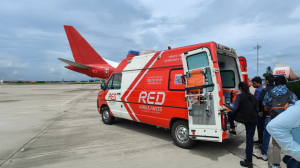
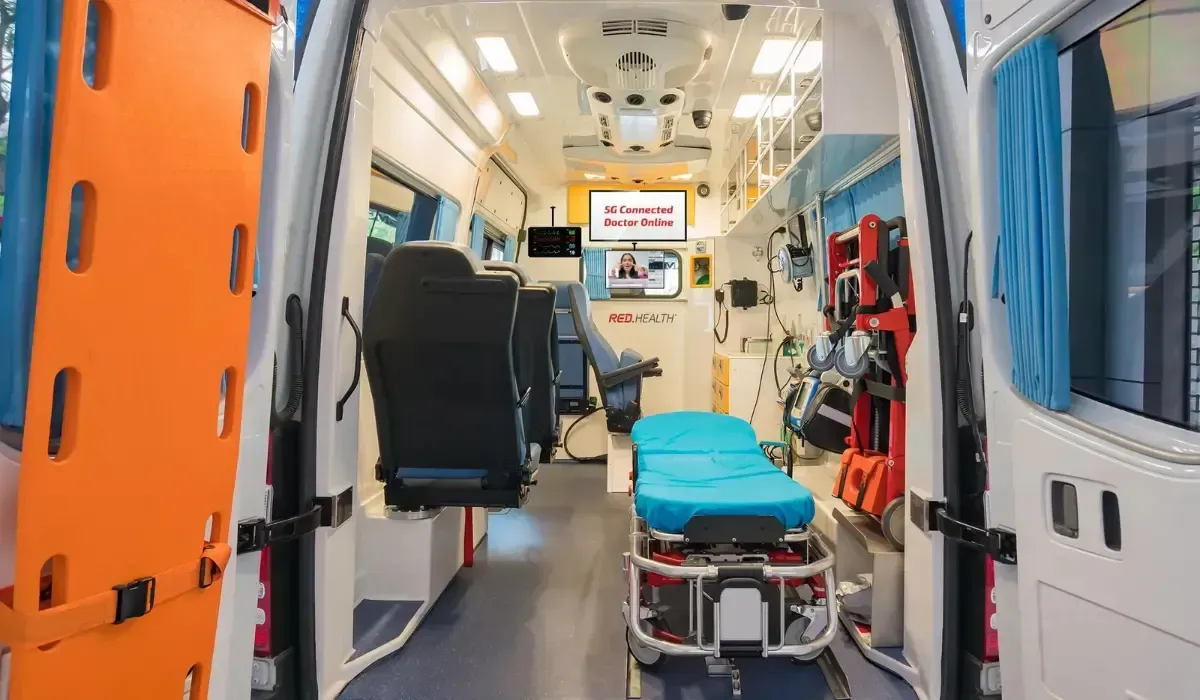
Need emergency support right now? Call RED Health Ambulance immediately for
dependable care. Our BLS and ALS ambulances are available 24/7, ensuring you or your loved ones reach the right
medical help without delay.