Air vs Train Ambulance: How Doctors Decide the Right Mode for Critical Patients
Updated on 19 January, 2026
Updated on 19 January, 2026
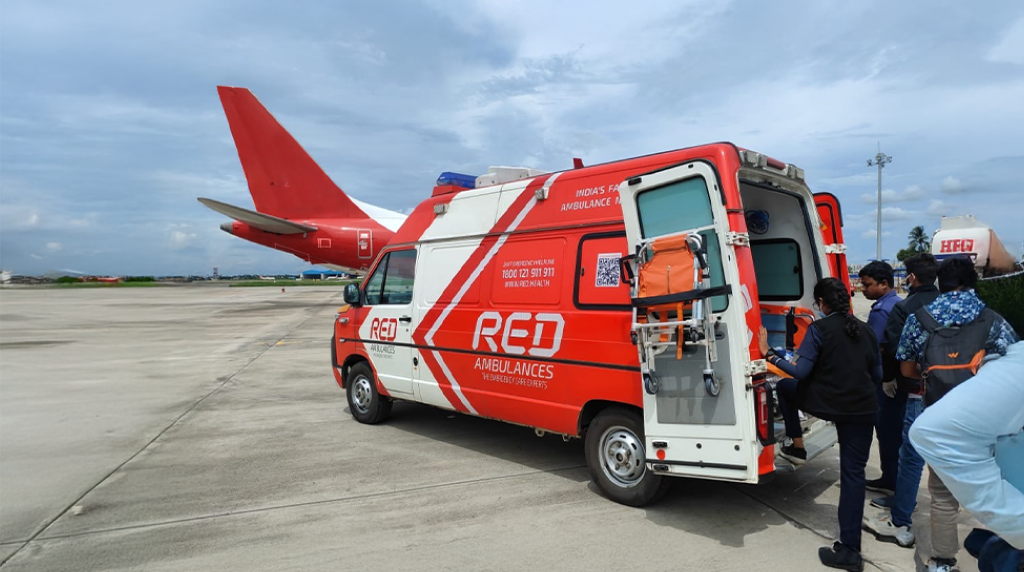
When a patient needs to be shifted urgently from one city to another, the question doctors face isn’t “how fast can we move?”
It’s “what’s the safest way to move this patient right now?”
That’s where air ambulances and train ambulances come in. Both save lives. Both are critical. But they serve very different medical situations.
Let’s break it down simply. First, what exactly are these two options?
An air ambulance is a medically equipped aircraft, usually a fixed-wing plane, designed to transport critically ill or injured patients over long distances very quickly. It functions like a flying ICU, with doctors, paramedics, ventilators, oxygen support, and continuous monitoring onboard.
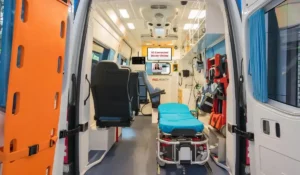
A train ambulance is a specially modified coach attached to a regular passenger train. Inside, it’s converted into a medical unit with stretchers, oxygen, monitors, and trained medical staff. It’s used for long-distance transfers when time is important, but the patient is stable enough to travel for several hours.
This decision is clinical, not commercial. Doctors assess four key factors before choosing:
Air Ambulance is chosen when:
Train Ambulance is chosen when:
In short: unstable = air, stable = train
Air Ambulance
Train Ambulance
Doctors ask: “Can this patient afford to spend 12–24 hours travelling?”
If the answer is no, air is the only option.
Air Ambulance works best when:
Train Ambulance works best when:
Some patients need:
For these, air ambulances offer tighter control and faster response.
Others need:
These patients do well in train ambulances, where the environment is more stable and less stressful.
Best for: critical, unstable, or life-threatening cases.
Best for: stable patients who still need medical care over long distances.
In critical medical transfers, the biggest risk isn’t the distance. It’s what can go wrong in between. This is where RED Health stands apart. RED doesn’t start with a vehicle. They start with the patient.
Before recommending an air or train ambulance, RED’s medical team reviews:
Only then is the mode decided.
No unnecessary air transfers
If a patient can travel safely by train, RED will say so.
No risky downgrades
If the condition demands air transfer, it’s escalated immediately — without delays or compromises.
Doctor-led journeys, not logistics-led ones
Every transfer is supervised by trained critical-care doctors or nurses, not just transport staff.
True end-to-end care
From bedside pickup → in-transit monitoring → hospital handover, care is continuous.
No gaps. No confusion. No “figure it out on arrival”.
One team, one point of accountability
Families aren’t left coordinating between hospitals, railways, airports, and ambulances. RED handles it all.
RED Health doesn’t push one option over the other. Our medical teams:
Whether it’s a rapid air transfer or a carefully planned train journey, the focus stays the same: patient safety, continuity of care, and zero gaps in treatment.
There’s no “better” option between air and train ambulances.
There’s only the right option – for that patient, at that moment.
Doctors don’t choose speed alone. They choose what gives the patient the best chance to arrive safely.
And when that decision is backed by strong medical logistics and experienced teams, it can make all the difference between a risky transfer and a smooth, life-saving one.